FAGACE TECHNOSERVE PARTNERSHIP
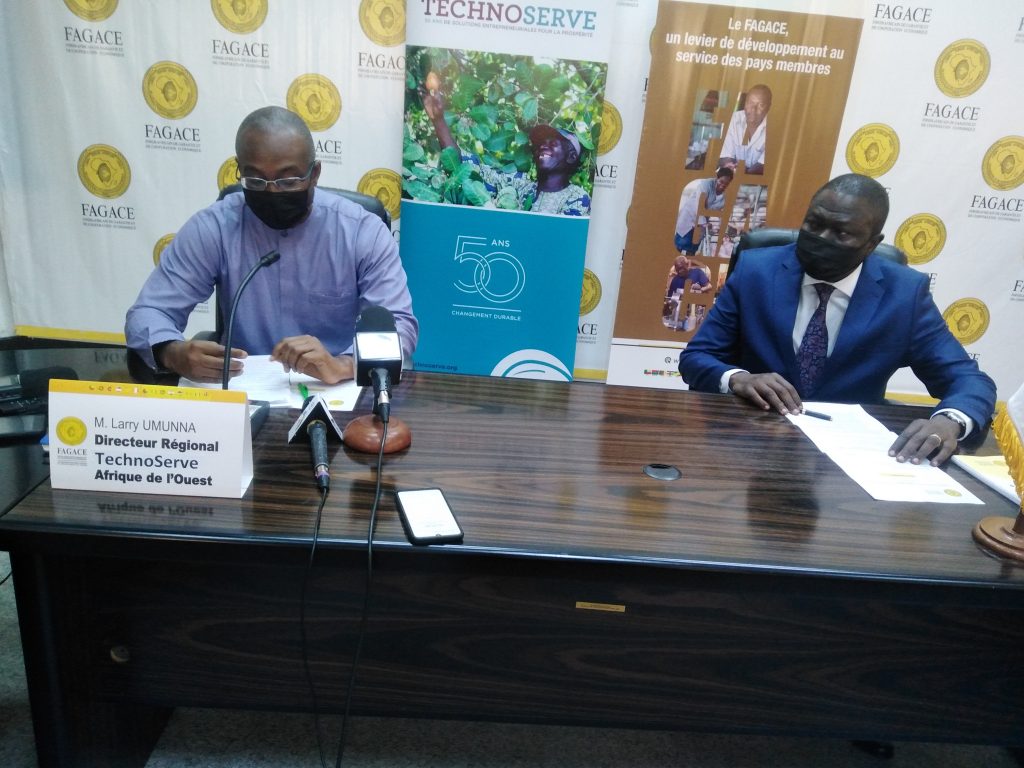
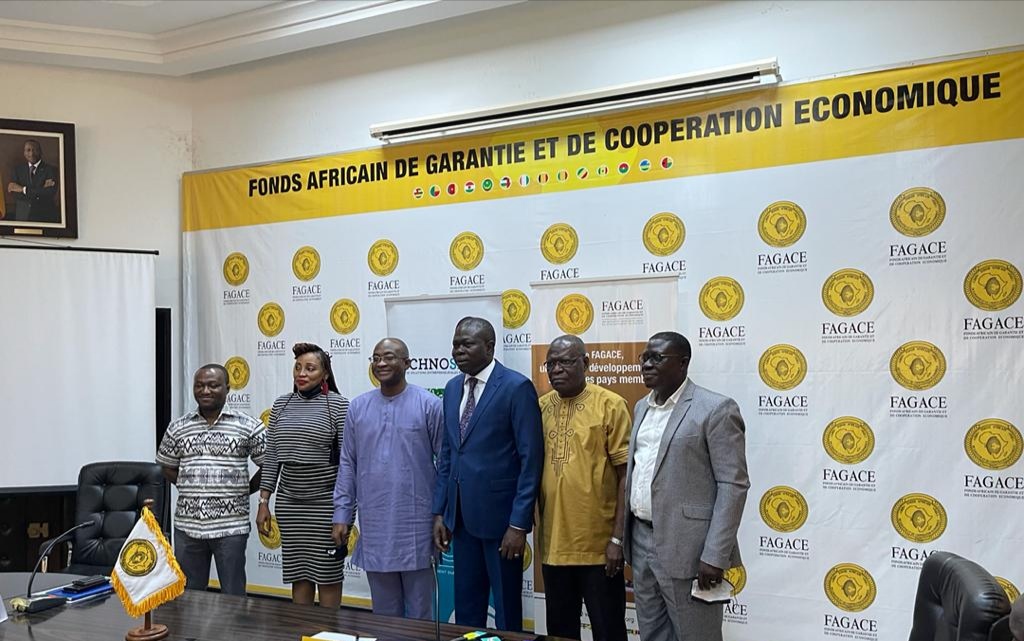
On Thursday, July 8, 2021, the headquarters of the African Guarantee and Economic Cooperation Fund (FAGACE) in Cotonou served as the setting for the official signing ceremony of a Partnership Memorandum of Understanding between TechnoServe and FAGACE in the presence of the Director General of FAGACE, Mr. Ngueto Tiraïna YAMBAYE and the Regional Director of TechnoServe West Africa, Mr. Larry UMUNNA.
This Agreement seals the formal commitment of the two institutions to work together to improve the quality of life of the populations living in the countries of intervention.
It is based on common principles and objectives and recognizes strong complementarity in relation to the services provided, the objectives in the fight against poverty and the promotion of wealth, particularly in sectors as strategic as that of Agriculture, ‘agro industry. It also provides for appropriate technical assistance and adapted and preferential financing mechanisms for more convincing results in the economic and social development of the countries in which they operate.
Indeed, FAGACE and Technoserve have extensive experience in Africa and around the world: FAGACE has been supporting the financing of Africa for 44 years and Technoserve has been involved in the world for more than 50 years.
Today FAGACE operates in 14 member states and Technoserve covers 29 countries around the world. The two organizations are currently found in 04 countries: Benin, Burkina Faso, Ivory Coast and Rwanda and are committed to strong complementarity of intervention at the level of these countries to make a difference.
Finally, by intervening in several countries in the region, FAGACE and Technoserve will be able to better learn from their experiences and have more impact in terms of their interventions.
This agreement is also part of the FAGACE 2021-2025 Strategic Plan, the ambitions and actions of which are in line with the objectives of the development support strategies adopted at the level of the Member States in order to support the traditional pillars of the economy such as agriculture, agri-food, manufacturing industry, infrastructure.