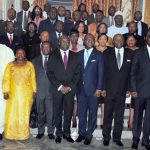
Madame Louise MUSHIKIWABO, Minister of Foreign Affairs and Cooperation of the Republic of Rwanda proceeded on June 18, 2015 to the signing of the headquarters agreement between the Rwandan Government and the Fonds Africain de Garantie et de Coopération Economique (FAGACE).
The signing of this headquarters agreement with the Rwandan Government is part of FAGACE’s four-year plan initiated by the Board of Governors under the leadership of Managing Director, Mr Henri-Marie DONDRA since 2012. Indeed, the diversification and decentralization of the Fund’s activities aim to strengthen the quality of its support to member countries in the field.
This new headquarters agreement in Rwanda, which comes just a few weeks after that of Cameroon in Central Africa, marks an important step in the implementation of this strategy of decentralizing the Fund’s activities across the continent.
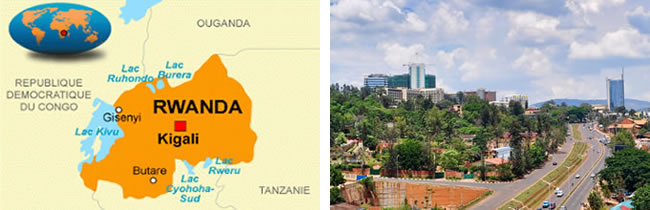
In East Africa, Rwanda was the obvious choice, as the country lies outside the UEMOA and CEMAC economic zones, to which most of the institution’s current member countries belong. Moreover, its central location gives it access to a wider regional market.
On the economic front, Rwanda is enjoying remarkable and undeniable growth. The impressive growth rate of its gross domestic product (GDP) over the last two decades bears witness to its economic vitality, and this needs to be sustained.
As a development institution, FAGACE is fully in line with the Government of Rwanda’s efforts to encourage and support the development of the country’s economic activities, with a view to achieving inclusive growth, particularly in the priority sectors of agriculture, industry and services.
In this perspective, the creation of the Fund’s Representative Office in Rwanda will bring clear benefits to the country. Key value will come from improving portfolio quality, project design and supervision, accelerating project implementation, as well as enriching dialogue with key partners and improving the quality of services offered.
The process of decentralizing the Fund’s activities began in 2007, in response to greater demand from its customers and stakeholders. Since then, the Management has been undertaking progressive institutional reforms to increase its presence in member countries and improve efficiency at local level.